Clear Breathing Insights
Why Do Your Lungs Never Feel Completely Clear Anymore?
If thick, sticky phlegm keeps coming back, researchers are beginning to question whether the mucus itself is the whole story.
New observations are changing how some experts think about why lungs stop feeling completely clear after 50.

In this short presentation, you'll see why researchers began asking a different question about recurring phlegm—and what they discovered inside aging lungs.
Does This Sound Familiar?
For many adults over 50, recurring phlegm doesn't appear overnight.
It often begins with small changes that gradually become part of everyday life—until they become difficult to ignore.
You may recognize some of these:
✔ Thick, sticky phlegm that keeps coming back
✔ Clearing your throat every morning
✔ A wet cough that never seems to fully disappear
✔ A feeling that your lungs never completely clear
Over time, you may also notice:
✔ Walking upstairs feels more tiring than before
✔ Talking for several minutes makes you cough
✔ Waking up with a congested chest
✔ Breathing feels heavier during simple activities
Many people assume these changes are simply part of getting older.
But researchers studying recurring phlegm began asking a different question...
Why do some lungs gradually lose the ability to clear mucus naturally?
Watch the short presentation to see what researchers believe may be happening deep inside the lungs.
If several of these changes sound familiar, you're not alone.
Researchers noticed the same pattern in thousands of adults over 50.
That's what led them to completely rethink why recurring phlegm keeps coming back.
Why Researchers Began Looking Beyond The Mucus
For years, recurring phlegm was treated as the problem itself.
But researchers studying adults with persistent mucus kept seeing something they couldn't easily explain.
Even after the mucus was cleared...
many people's lungs still didn't seem to function the way they once had.
That observation changed the direction of their research.
If mucus isn't the whole story...
What keeps it coming back?
Researchers kept seeing the same pattern:
✔ Thick phlegm returning again and again
✔ Airways that never seemed completely clear
✔ Morning congestion becoming more frequent
✔ Everyday breathing gradually becoming more difficult
Those repeated observations eventually changed the direction of their research.
Instead of asking,
"How do we remove the mucus?"
Researchers began asking something very different.
"What is preventing the lungs from clearing it naturally?"
What Researchers Began Finding Inside Aging Lungs
For years, most experts believed breathing gradually became more difficult because of aging, smoking, or long-term exposure to pollution.
But researchers studying persistent breathing problems began noticing something they hadn't expected.
Healthy Lung Function
Lungs naturally clear mucus efficiently.
Age-Related Changes
Researchers observed that mucus may remain longer inside aging airways.
Could recurring phlegm be a symptom...
rather than where
the problem begins?
Researchers noticed that the traditional explanation didn't fully match what they were observing.
Instead of confirming what many experts expected, researchers began uncovering a very different pattern inside aging lungs.
That unexpected pattern may help explain why recurring phlegm often returns—even after it appears to have cleared temporarily.
Why Understanding How Healthy Lungs Work Changes Everything
Before researchers could understand what was happening inside aging lungs, they first needed to understand how healthy lungs naturally keep themselves clear.
Healthy lungs are constantly working to move unwanted particles and mucus out of the airways as part of their normal function.
Researchers realized that understanding this natural process became the key to asking a completely different question.
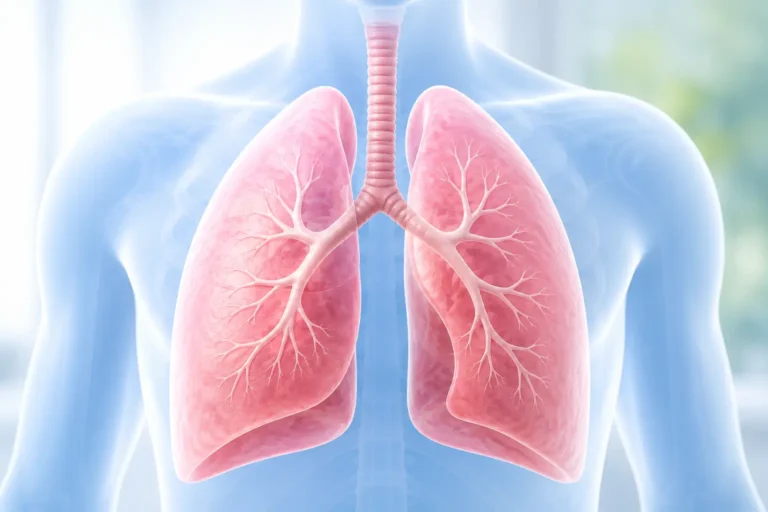
The short presentation explains why understanding healthy lungs became the turning point in this investigation.
Frequently Asked Questions
Here are answers to some of the most common questions readers ask before watching the presentation.
Why does phlegm keep coming back even after I cough it up?
Recurring phlegm may have more than one contributing factor. Researchers studying breathing changes in older adults have been investigating why mucus sometimes continues to return instead of clearing naturally.
Is recurring phlegm simply a normal part of getting older?
Many people assume so. However, researchers have been exploring whether some age-related changes inside the lungs may help explain why recurring phlegm becomes more common over time.
Will this presentation explain how healthy lungs normally clear mucus?
Yes. The presentation explores how healthy lungs naturally clear mucus and why understanding that process became an important part of the researchers' investigation.
Is this a medical diagnosis or treatment?
No. This is an independent educational presentation that discusses ongoing research and different perspectives related to recurring phlegm and breathing changes. It is not intended to diagnose, treat, cure, or prevent any disease.
Who is this presentation for?
It is intended for adults who have noticed recurring phlegm, frequent throat clearing, chest congestion, or the feeling that their lungs never seem completely clear.
Ready To Learn What Researchers Discovered?
If recurring phlegm keeps coming back, or your lungs never seem to feel completely clear, this short
educational presentation explains why researchers began asking a different question—and why
understanding healthy lungs became the turning point in their investigation.
Educational Disclaimer
This presentation is intended for educational purposes only. It is not intended to diagnose, treat, cure, or prevent any disease, nor replace professional medical advice. Individual experiences may vary.